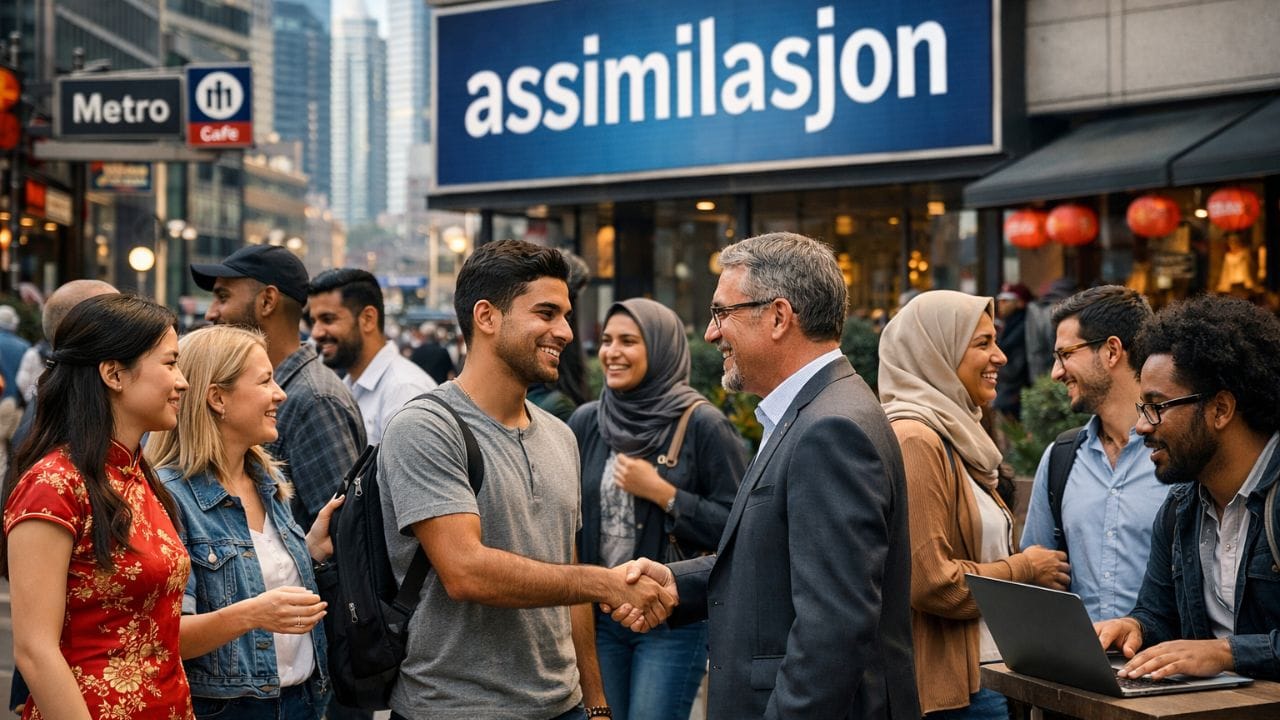
The concept of assimilasjon—or assimilation—has long been a subject of sociological, political, and cultural discussions around the world. Rooted in the processes by which individuals or groups from different ethnic, cultural, or religious backgrounds integrate into the dominant society, assimilasjon reflects the changing dynamics of societies as they encounter cultural diversity.
While assimilation can lead to increased cohesion and unity within a society, it also raises important questions about identity, belonging, and cultural preservation. This article delves into the multifaceted nature of assimilasjon, exploring its implications on social integration, cultural identity, and the tensions that often arise when diverse communities converge within a shared space.
What is Assimilasjon?
At its core, assimilasjon refers to the process by which minority or immigrant groups gradually adopt the customs, values, and norms of the dominant society, thereby becoming part of the broader cultural fabric. This could involve changes in language, religion, social practices, and even political alignment. The process can be voluntary or forced, and its impact varies depending on the specific historical, cultural, and political context.
In many societies, assimilasjon has been seen as a pathway to social inclusion, helping newcomers gain acceptance within the larger society. However, this process is not without its challenges, particularly when it involves the loss of cultural heritage and identity. While some may view assimilation as essential for national unity, others may see it as a threat to the diversity that enriches society.
The Role of Assimilasjon in Modern Societies
Assimilasjon plays a crucial role in shaping the demographic and cultural landscape of modern nations, particularly those that have a history of immigration or colonialism. As globalization has led to increased migration, countries are grappling with how to integrate newcomers while maintaining national unity.
In many Western countries, the debate surrounding assimilasjon is particularly relevant in the context of multiculturalism versus integration. Some countries have historically embraced multiculturalism, fostering the idea that different cultures can coexist peacefully while maintaining their distinctiveness. Others have pushed for a model of integration, where newcomers are expected to adopt the cultural norms and values of the dominant society in exchange for full participation in public life.
The model of assimilasjon varies greatly from country to country. In some cases, integration is viewed as a two-way street, where both the host society and the newcomers adjust to each other. In other instances, the emphasis is solely on the expectations placed on immigrants and minority groups to assimilate into the prevailing culture.
Assimilasjon in Scandinavian Contexts
In Scandinavian countries like Norway, Denmark, and Sweden, assimilasjon has been a key focus in discussions of immigration policy. These countries have long-standing traditions of social welfare and a strong sense of national identity, making the process of integration both a social and political challenge.
In Norway, assimilasjon has been central to the debate over immigration and integration policies. As the country has become more ethnically diverse, particularly with the influx of refugees and migrant workers, the idea of assimilasjon has been promoted as a means of ensuring that newcomers are able to contribute to society while adhering to the values of Norwegian culture. This includes fluency in the Norwegian language, adherence to Norwegian laws, and the participation in Norway’s democratic system.
However, the push for assimilasjon has not been without controversy. Critics argue that it can lead to the marginalization of minority cultures, as people are often pressured to abandon their traditions and heritage in favor of a homogeneous national identity. Additionally, the concept of assimilation has raised concerns about the social exclusion of those who may struggle to fully integrate due to language barriers or differing social norms.
Challenges of Assimilasjon: The Tension Between Unity and Diversity
While assimilasjon can lead to greater societal cohesion, it often comes at the expense of cultural diversity. The process of assimilation can force individuals to conform to the dominant culture, resulting in the erosion of distinct cultural identities. This tension between unity and diversity is a central issue in debates over assimilasjon.
For some immigrant groups, the pressure to assimilate may lead to a sense of alienation, as they are expected to abandon their customs, language, and religious practices in favor of those of the host society. This can create feelings of disenfranchisement and marginalization, as individuals feel they are being forced to choose between their cultural heritage and their desire to be accepted by the broader society.
In addition, assimilasjon can sometimes fuel racial and ethnic tensions. When minority groups are expected to conform to the dominant culture without the space to express their unique identities, it can create resentment and division within society. This dynamic has been evident in various countries where immigrant communities face discrimination or exclusion despite their efforts to integrate into society.
The Future of Assimilasjon: Embracing a More Inclusive Model
As global migration continues to rise, the traditional model of assimilasjon is being increasingly questioned. Many sociologists and policymakers argue that the concept of forced assimilation should be replaced with a more inclusive approach that respects cultural diversity while still fostering social cohesion.
A more inclusive model of integration would focus on mutual respect and understanding, encouraging both newcomers and the dominant culture to adapt to one another. This approach emphasizes the importance of cultural exchange, community engagement, and the preservation of distinct identities while promoting shared values such as democratic participation, social responsibility, and respect for human rights.
In this framework, assimilasjon would no longer be about the complete erasure of difference, but rather about creating a society where cultural diversity is seen as an asset, not a threat. By encouraging dialogue and understanding between different groups, societies can create a more harmonious coexistence where all individuals feel valued and included.
Assimilasjon vs. Multiculturalism: The Ongoing Debate
The debate between assimilasjon and multiculturalism is one that continues to divide countries, particularly in Europe. Proponents of multiculturalism argue that societies should embrace diversity and allow minority groups to maintain their cultural identities. They believe that this creates a richer, more dynamic society where different traditions can coexist and complement one another.
On the other hand, advocates of assimilasjon argue that national cohesion and unity are best achieved when individuals adhere to a common set of cultural values and norms. In their view, integration should involve more than just tolerance—it should require individuals to adopt the dominant culture in order to fully participate in society.
The challenge lies in finding a balance between these two approaches, ensuring that diversity is respected while fostering a sense of shared identity and belonging. The future of assimilasjon may not lie in forcing conformity, but rather in encouraging mutual respect and collaboration among all members of society.
Conclusion: The Complexities of Assimilasjon in a Globalized World
In conclusion, assimilasjon remains a complex and multifaceted process that plays a critical role in shaping the cultural and social fabric of societies around the world. While it can promote unity and cohesion, it also raises important questions about identity, diversity, and belonging. As societies continue to evolve and become more interconnected, the need for a more inclusive approach to integration becomes increasingly apparent.
Rather than focusing solely on the assimilation of minority groups into the dominant culture, a more balanced approach that respects and celebrates diversity while promoting shared values is essential. In this way, assimilasjon can be seen not as a tool of cultural erasure, but as a process of adaptation that fosters a more inclusive and harmonious society.
FAQs About Assimilasjon
1. What is the meaning of assimilasjon?
Assimilasjon refers to the process by which minority groups adopt the customs, language, and norms of the dominant culture in a society, often leading to their integration into the broader social and political fabric.
2. How does assimilasjon differ from multiculturalism?
While assimilasjon focuses on the integration of minorities into the dominant culture, multiculturalism advocates for the coexistence of different cultures and the maintenance of distinct cultural identities.
3. Why is assimilasjon important?
Assimilasjon can promote social unity and cohesion by ensuring that all members of society adhere to common cultural norms and values, which can contribute to a stable and functional society.
4. What are the challenges of assimilasjon?
The main challenges of assimilasjon include the potential loss of cultural identity, the marginalization of minority groups, and the tension between diversity and national unity.